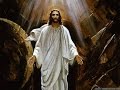
Advent of Christ, "Second Advent" of the Lord, The Returning Christ, The Second Coming of Christ is the return of Jesus Christ from Heaven Second Advent: THROUGH BIRTH Google translate from Bulgarian The Bible foretells the birth of a Messianic person who will change the world. The Messiah at the Second Advent will be born in the East. Jesus will personally transfer to him the Messianic mission, to save the world. The Lord of the Second Coming is returning with a "New Name", Bible foretells, but first He will be rejected and persecuted by this generation. Numerous Christians, however, have neglected to pay attention to these Biblical verses. Often, they were even teaching against them. But now is time to open our eyes for the truth. The Bible promises a new and complete truth
As the Bible itself says in 1 Corinthians 13:8-12 now we don't have the complete truth:
"For we know in part and we prophesy in part (The Gospel)... Now we see but a poor reflection as in a mirror; then we shall see face to face. Now I know in part; then I shall know fully, even as I am fully known." 1 Corinthians 13:8-12
The Bible itself teaches that it is not the complete truth. Only when the Lord of the Second Advent comes, the Complete Truth will be revealed; only then we will come to know God directly; His truth will be written in our hearts, and our bodies will be liberated from Satan's dominion. When the full understanding comes, the partial will be abolished, says Apostle Paul in I Corinthians 13:10. "but when perfection comes (The Complete Truth), the imperfect disappears. " The problem throughout history was that caught in the partial, we do not want to let it go and accept the full. The words of Jesus himself about the Second Coming From the words of Jesus in the Bible we can understand that the Second Coming, Christ will most likely be born on the earth. As predicted in Revelation 12:5,
A great and wondrous sign appeared in heaven: a woman clothed with the sun, with the moon under her feet and a crown of twelve stars on her head. She was pregnant and cried out in pain as she was about to give birth... She gave birth to a son, a male child, who will rule all the nations with an iron scepter. And her child was snatched up to God and to his throne. (Revelation 12:5)
There is no other child that can have such a direct connection to God, except if it's being born sinless - the Messiah. In other words, when the second coming of Messiah comes, he will look different and even have a "new name". As stated in Rev. 19:12, "and bearing a new name that no one knew ... and his name was the word of God. "
Is Bible really predicting this? Could Jesus really forward his mission to another? In John 14:16 Jesus alludes to just that: "And I will pray the Father, and He will give you another Comforter to be with you forever." Jesus even clarifies why must come another: "I have yet many things to say to you, but you can not bear them now. And when He comes (the Lord of the Second Coming), the Spirit of truth will guide you into all truth." Here Jesus is talking about the Complete Truth that will be given by the Lord of the Second Advent.
Bible is clear, the Second Coming will be born as a child with a different name. Jesus will give him his mission and he will reveal the full truth to the world that Jesus did not reveal then because people were not yet ready for it 2000 years ago.
Jesus will give his Messianic mission to another Can we be sure that this is really what will happen? These words of Jesus given in the revelation to the prophet John, are even more adamant.
To him who overcomes and does my will to the end, I will give authority over the nations— 'He will rule them with an iron scepter; he will dash them to pieces like pottery'— just as I have received authority from my Father.(Revelation 2:26-28)
As Jesus was anointed with the Messianic authority to rule the nation, meaning to be Christ-Messiah, which translated means "Anointed to rule", so is he going to "anoint" the Lord of the Second Advent with the same Mission. "Just as I have received... from my Father", promises Jesus to the prophet.
This shows that another sinless person as Jesuswill appear ("having deeds pure as His") and that Jesus himself would give him the same mission (as I received from my Father), which is the Messianic mission (to rule all nations with an iron staff). That means to be the "anointed one" as a "King of Kings", meaning Christ, Messiah.
But some would ask, why than Jesus said that he is the only Son of God, and there is no other name to bring us salvation? Isn't that in contradiction with the prophecy of the Bible, that he will come with a "New Name". No it is not. 2000 years ago it was true; at that time Jesus was the only Son of God and there was still no other name by which salvation comes. But not only the Bible is clear that the Second Coming of Christ, Second Advent of the Lord, is with a "new name", but also the qualification of a Son of God, will no longer be valid for only one person. In fact, the purpose for which God is sending the Messiah is to restore all people as God's Children - Sons and Daughters of God. The Second Advent will rule with the "Word"
In both quotations, Rev. 2:26-28 (That Jesus will give the same mission as he has received from the Father) and Rev. 12:5 (the birth of a boy, who right from his birth has a relationship with God), Bible is clearly talking about one and the same person ("who will rule all nations in a rod of iron"). This expression everywhere in the Bible is specifying the Messianic figure, the person who will bring the rule of God's righteousness through the "Word", "The Truth". Therefore we cannot expect him to do some special signs or miracles. The biggest miracle Christ brings is the Truth by which to live. The biggest miracle which he has to achieve is to transform the world towards goodness through this word. This is the reason, why the Bible everywhere talks about the sword coming out of his mouth that he will judge with. The Bible predicts the failure of Christians to accept
Is it possible then that today's Christianity will deny the Bible and turn against the will of Jesus, by rejecting this anointed by Jesus man, who is the Second Coming of the Messiah? Jesus himself warns us of this. He asked, "When he (the Lord of the Second Coming) comes, will he find faith?" He also warned us that the Second Coming will come as a "thief in the night".
When the child is born on earth only selected pure people will know by revelations, while others, even Christian leaders may be in darkness. Therefore, they can certainly turn against him and instead of becoming the first to be saved they will become persecutors and criticize the Lord of the Second Advent, because of their ignorance. For this, Jesus will have to condemn even the most devoted Christians, "Depart from me you evildoers..." even though their pride and certainty of salvation is in their words, "Not in thy name we prophesied and spoke languages, and preached". At the moment they turn against those who sent Jesus, they automatically become the biggest evildoers in the eyes of God. If reject to hear, as has always been in the history of all prophets sent by God. Prophets were always misunderstood and persecuted and Bible warns us that many Christians will easily do the same mistake and reject the Messiah at the Second Advent. New revelations about the return of Christ Many Christians receive direct revelations and guidance about the return of Christ. However, they contradict the traditional understanding of return on the clouds. According to them, immediately after the emergence of "The Red Dragon" (communism), in the East will be born sinless child. It will grow and bring salvation to the world and lead people of all races, cultures and religions to build God's kingdom on earth. These new revelations, though difficult to accept are firmly based on Biblical predictions: Conclusions of the Second Coming of Elijah If we consider the second coming of Elijah, it becomes clear how God works and how Christ will return. Since the second coming of Elijah is supposed to represent the return of Elijah who went up into the sky, people expected and believed that Elijah will undoubtedly descend from heaven. But Jesus clearly states that John the Baptist, who was born on earth, is Elijah (Matt. 11:14, 17:13). The fact that the second coming of Elijah is carried out by John the Baptist does not mean that Elijah himself was born again as John the Baptist. Elijah is in the spiritual world and is helping John, who had the same mission on earth (Luke 1:17). Therefore, although the mission is the same, the person is different.
Jesus called the young Moon at the age of 15
Can anyone be called a true Christian, if he goes against the will of Jesus? Reverend Moon began to communicate with God and Jesus at an early age. He was 15 years old when Jesus Himself appeared to him and repeatedly urged the young Korean boy, to accept this mission and lead the implementation of God's will on earth. If we don't know why Jesus has called Sun Myung Moon to fulfill the role of the Second Coming of the Lord, we should ask Jesus himself.
Of course, it is much easier to spit in the face of Jesus and say, "I can not accept that you work with Korean, I'm not expecting the second Advent in such a way." The Bible warns that God is working not the way we expect, but we always think we know better than God. It is difficult for us to be humble and sincerely ask Jesus himself, what he thinks. It is hard to have patience and perseverance in our prayers and sincere search until He answers. But if we sincerely pray with an open heart, then God will find a way to guide us to understand the truth. And that's what happened to me.
Personal testimony from God
One day God took me into the spiritual world and I heard the angels and saints to say, "That is the Messiah, and throughout your life we were preparing you just for this, so you can accept and follow him." I was shown by the spirit and in seconds I could see Rev. Moon's life and victories in the past 70 years. I saw spiritually how he brought the end of communism (The Red Dragon), as predicted in the Bible. When I regained myself, my legs trembled. I couldn't tell anyone else who the Messiah is. Who would understand? People were sitting next to me but they wouldn't believe if I told them. Then I understood the quote, " two will be in the same bed, in the same field... one will be grabbed and the other not." The rapture is in our hearts, not in the physical air. God's Ideal is also to be established in our hearts, not in the physical air and vaporized water in the clouds.
I went into my room, crying and praying, "Heavenly Father I know you're telling me this, but I can not accept it." I wanted a messiah on clouds. I did not like God's way. But the Bible proved me wrong in this too. In Revelation 17:15 it is clear that "water" symbolizes the sinful multitudes of people, while "clouds" are the purified, separated from the sin and prepared to accept the Second Coming. Yes, Jesus said he would come again on clouds, but we read in Philippians, that this refers to "cloud of witnesses". Meaning, only those with pure and sincere hearts will be able to understand and accept the Lord of the Second Coming.
Second Advent of Christ, "Second Advent" of the Lord, The Returning Christ, The Second Coming of Christ is the return of Jesus Christ from Heaven to Earth as expected in Christian eschatology
For 2000 years Christians believed that the Fall of Adam and Eve happened because God gave us free will. The Principle, however, clarifies that the Fall would never have had happened if their free will was not taken away.
"It cannot be that freedom caused the human Fall." (because) "Free actions generated by free will bring about only good results." DP - Tha Fall of Man
The Divine Principle also explains that in the fallen, unprincipled state that we are now, we have no freedom:
"In truth, human beings lost their freedom as a result of the Fall." (and) "There is no freedom outside the Principle." DP - Tha Fall of Man
Many would say that we still have a choice. Do we!? As studies show, our subconscious decides. We just think we have a choice, while our subconscious memories are pushing us what to choose, without our awareness. So it depends on how much our lineage is on God's or Satan's side, I guess, to where the choice will end. We don's see the spiritual forces that work on our subconscious mind. So how can our Original Mind be free?
"Freedom pursues accomplishments that bring joy to God," DP explains, and "The freedom of a true person never deviates from the Principle". Why then humans do evil? A more powerful force pushed our first ancestors away from the Principle, away from the free will of their original mind. We now know, this was the premature sexual love, in which Lucifer seduced them.
Lucifer used the much stronger power of the unprincipled love to push God's children off track. Humanity lost its free will and got trapped under Satan's control. As DP explains, outside of the Principle we are not free. Even if you want to get out... no chance... he will not let you go. No freedom there. We are not free:
"There is no freedom outside the Principle... the mind of an original, sinless person cannot operate outside of God's Word, that is, the Principle, it will never express free will or generate free action apart from the Principle. Undoubtedly, the freedom of a true person never deviates from the Principle... freedom pursues accomplishments that bring joy to God. Free actions generated by free will bring about only good results. Therefore, it cannot be that freedom caused the human Fall. "DP - Tha Fall of Man
That was God's unbearable pain. Even if his children wanted to come back to him, they were not free to do that.
"Due to the Fall, human beings became ignorant of God and His Heart. This ignorance has rendered the human will incapable of striving toward goals which are pleasing to God." DP - Tha Fall of Man
One person had to win over Satan and restore that freedom. That's the mission of the Messiah. But work is not done until we all learn his model and get our freedom too.
Jesus was victorious on an individual level, to get out of Satan's dominion. But because he was rejected, no one could follow his example. No one could inherit that victory.
That's why, Jesus promised that in the end, one will be victorious and pure like him. And he himself will give to that person the same mission, as he received from his Father; The Messianic Mission, to save the world.
This will be the new child from Revelation 12:5, with the "new name", Revelations talks about in Chapter 19. Read, Second Coming Through Birth
"First, there is no freedom outside the Principle. Freedom requires both free will and the free actions pursuant to that will."DP - Tha Fall of Man
To summarize, freedom cannot exist outside the Principle. Freedom is accompanied by the responsibility laid out in the Principle, and freedom pursues accomplishments that bring joy to God. Free actions generated by free will bring about only good results. Therefore, it cannot be that freedom caused the human Fall. It is written, "where the Spirit of the Lord is, there is freedom."[63] This freedom is the freedom of the original mind.
As long as Adam and Eve were bound by God's warning not to eat of the fruit of the tree of the knowledge of good and evil, they should have kept this commandment by their free will and without God's intervention. Certainly, the freedom of their original mind, which is inherently responsible and seeks the good, was prompting them to obey it. When Eve was about to deviate from the Principle, the freedom of her original mind aroused fear and foreboding in her in an attempt to prevent her from deviating. Ever since the Fall, this freedom of the original mind has been working to bring people back to God. Working in this way, freedom could not possibly have caused human beings to fall. Rather, the human Fall was caused by the stronger power of unprincipled love, which overwhelmed the freedom of the original mind.
In truth, human beings lost their freedom as a result of the Fall. Yet even fallen people possess intact a seed of their original nature which seeks freedom, and this makes it possible for God to carry on the providence to restore it. With the progress of history, people have been ever more zealously aspiring for freedom, even at the cost of their lives. This is evidence that we are in the process of restoring our freedom, long lost due to Satan. The purpose of our search for freedom is to facilitate the accomplishment of our God-given responsibility, which is essential for fulfilling our purpose of creation. Read the full text... READ MORE:
The word "Messiah" in Hebrew means the "anointed one," signifying a king. The chosen people of Israel believed in the Word of God as revealed through the prophets, which promised that God would send them a king and savior. Such was their messianic expectation. God sent this Messiah in the person of Jesus Christ. "Christ" is the Greek word for Messiah.
The Messiah comes to fulfill the purpose of God's work of salvation. Human beings need salvation because of the Fall. Hence, before we can clarify the meaning of salvation, we must first understand the matter of the Fall. Furthermore, since the Fall implies the failure to accomplish God's purpose of creation, before we can clarify the significance of the Fall, we must first understand the purpose of creation.
God's purpose of creation was to be fulfilled with the establishment of the Kingdom of Heaven on earth. However, due to the human Fall, we have built hell on earth in place of God's Kingdom. Since the Fall, God has been repeatedly working His providence to restore the Kingdom. Being the history of the providence of restoration, human history's primary goal is to establish the Kingdom of Heaven on earth.[1]
Section 1 Salvation through the Cross
1.1 The Purpose of Jesus' Coming as the Messiah
Jesus came as the Messiah for nothing less than the complete salvation of humanity; he was to fulfill the goal of the providence of restoration. Jesus was supposed to establish the Kingdom of Heaven, first on the earth. We can infer this from Jesus' own teaching to his disciples, "You, therefore, must be perfect as your heavenly Father is perfect."[2] According to the Principle of Creation, a person who has realized the purpose of creation does not commit sin, because he is in full harmony with God and possesses a divine nature. With respect to the purpose of creation, such a person is perfect as Heavenly Father is perfect. Jesus gave this teaching to his disciples with the hope that they could be restored as people who had realized the purpose of creation and become citizens of the Kingdom. Furthermore, Jesus taught people to pray that God's Will be done on earth as it is in heaven because he came to renew fallen humanity as citizens of God's Kingdom and build the Kingdom on earth. He also urged the people, "Repent, for the kingdom of heaven is at hand."[3] For the same reason, John the Baptist, who came to prepare the way of the Lord, also announced the imminence of the Kingdom.[4]
What will people be like once they have been restored as those who have realized the purpose of creation and become perfect as Heavenly Father is perfect? Such people are fully attuned to God and experience God's Heart within their innermost self. They possess a divine nature and live their life with God, inseparable from Him. Moreover, they do not have the original sin, and hence are not in need of redemption or a savior. They do not need to pray arduously or practice a faith, both of which are necessary for fallen people as they seek God. Furthermore, since they do not have the original sin, their children are naturally born good and sinless and likewise have no need of a savior for the redemption of their sins.
1.2 Was Salvation Completed through the Cross?
Did Jesus' crucifixion, which brought us redemption from our sins, fulfill the purpose of the providence of restoration? If so, we would expect that faithful believers in Jesus would have restored their original nature and built the Kingdom of Heaven on earth. Yet in the entire history of Christianity, there has been no one, no matter how devout, who lived his life in inseparable oneness with God. Not one person has ever experienced God's Heart in its full intensity or possessed a divine nature. There has never been a believer who had no need of redemption or a life of ardent prayer and devotion. Even St. Paul, a great man of God, could not dispense with a life of faith and tearful prayer.[5] Moreover, no Christian parent, no matter how devout, has ever given birth to a child without the original sin, who could enter God's Kingdom without the grace of redemption by the Savior. Christian parents continue to transmit the original sin to their children.
What can be learned from this stark review of the Christian life? It teaches us that the grace of redemption by the cross has neither fully uprooted our original sin nor perfectly restored our original nature. Jesus, knowing that the redemption by the cross would not completely fulfill the purpose for which he came, promised he would come again. He understood that God's Will to restore the Kingdom of Heaven on earth is absolute and unchangeable. Thus, Jesus hoped to return and accomplish the Will of God completely.
Was Jesus' sacrifice on the cross for naught? Of course not.[6] If it were, Christianity would not have brought forth its illustrious history. Furthermore, our own personal experiences in faith make it plain how great is the grace of redemption by the cross. It is true that the cross has redeemed our sins; yet it is equally true that the cross has not entirely purged us of our original sin. It has not restored us to the unfallen state of perfected original nature in which we would never commit sin, and it has not enabled us to establish the Kingdom of Heaven on earth.
What is an accurate assessment of the extent of salvation through the cross? Unless this question is answered, it is difficult for people in the modern world to properly guide their faith. First, however, we must re-examine Jesus' death on the cross.
1.3 Jesus' Death on the Cross
Was Jesus' death on the cross the most desired Will of God? Let us first examine the words and deeds of the disciples as recorded in the Bible. There was one unanimous feeling evident among the disciples concerning the death of Jesus: they were grief-stricken and indignant. Stephen, for example, burned with indignation over the ignorance and disbelief of the Jewish leaders, and he condemned their actions, calling them murderers and rebels.[7] Christians since then have commonly shared the same feelings as the disciples of Jesus' day. If Jesus' death had been the foreordained outcome for the fulfillment of God's Will, then it might have been natural for the disciples to grieve over his death, but they would not have been so bitterly resentful over it, nor so angry at those Jewish leaders who caused it. We can infer from their bitter reaction that Jesus' death was unjust and undue.
Next, let us examine from the viewpoint of God's providence whether the crucifixion of Jesus was inevitable as the predestined Will of God. God called the chosen people of Israel out of the descendants of Abraham. He protected them, nurtured them, and at times disciplined them with tribulations and trials. God sent prophets to comfort them with the unshakable promise that one day He would send them a Messiah. He prepared them to receive the Messiah by having them build the Tabernacle and the Temple. When Jesus was born, God proclaimed his advent. He sent the three wise men from the East as well as Simon, Anna, John the Baptist and others to testify widely. Concerning John the Baptist in particular, many people knew that an angel had appeared and testified to his conception.[8] The miracles surrounding his birth stirred all of Judea in expectation.[9] Furthermore, John's ascetic life in the wilderness was so impressive that many people questioned in their hearts whether perhaps he was the Christ.[10] God's purpose behind sending such a great personality as John the Baptist to bear witness to Jesus as the Messiah was to encourage the Jewish people to believe in Jesus. Since God's Will was thus to have the Jewish people of that time believe that Jesus was their Messiah, the Jewish people, who were trained to live by God's Will, should have believed in him. Had they believed in him as God desired, would they have even entertained the thought of sending him to the cross? Would they have wanted any harm to come to the Messiah whom they had so long and eagerly awaited? However, because they went against God's Will and did not believe that Jesus was the Messiah, he was delivered to be crucified. We must understand, therefore, that Jesus did not come to die on the cross.
Next, let us examine the words and deeds of Jesus himself to ascertain whether his crucifixion was in fact the way to completely accomplish his mission as the Messiah. Jesus' words and deeds were meant to engender belief on the part of the people that he was the Messiah. For example, when the people asked him what they must do to be doing the works of God, Jesus replied:
This is the work of God, that you believe in him whom he has sent. , John 6:29
One day, when he was agonizing over the Pharisees' disbelief and having no one with whom to share his heart, Jesus looked down sadly over the city of Jerusalem. He wept as he lamented the fate of the Jewish people, whom God had so laboriously and lovingly guided for two thousand years. Jesus prophesied that the city would be so utterly laid waste that not one stone would be left upon another. He clearly pointed to the ignorance of the people, saying, "you did not know the time of your visitation."[11] On another occasion, Jesus lamented the stubbornness and disbelief of the people of Jerusalem, saying:
O Jerusalem, Jerusalem, killing the prophets and stoning those who are sent to you! How often would I have gathered your children together as a hen gathers her brood under her wings, and you would not! , Matt. 23:37
Jesus reproached the people who refused to believe in him, even though they were familiar with the Scriptures which testified to him:
You search the scriptures, because you think that in them you have eternal life; and it is they that bear witness to me; yet you refuse to come to me that you may have life. , John 5:39-40
I have come in my Father's name, and you do not receive me . . . if you believed Moses, you would believe me, for he wrote of me. , John 5:43-46
How many miracles and signs did Jesus perform in his desperate efforts to lift the people from their disbelief! Yet, even as they were witnessing the wondrous works of Jesus, the religious leaders mocked him as one
possessed by Beelzebul.[12] In the midst of such a wretched situation, Jesus cried out:
Even though you do not believe me, believe the works, that you may know and understand that the Father is in me and I am in the Father. , John 10:38
Then, confronting his opponents, he scathingly denounced their hypocrisy.[13] Through his words and deeds, Jesus tried to bring his people to believe in him, because it was God's Will that they do so. If they had followed God's Will and believed in Jesus as their Messiah, then who among them would have dared to send him to the cross?
From all the above evidence, we can deduce that Jesus' death on the cross was the unfortunate outcome of the ignorance and disbelief of the people of his day; it was not necessary for the complete fulfillment of his mission as the Messiah. This is well illustrated by Jesus' last words on the cross:
Father, forgive them; for they know not what they do. , Luke 23:34
If God had originally predestined Jesus to die on the cross, Jesus would have expected to go that path as his due course. Why, then, did he pray three times, "My Father, if it be possible, let this cup pass from me; nevertheless, not as I will, but as thou wilt"?[14] In truth, Jesus offered those desperate prayers because he knew well that his death would shatter the hope of attaining the Kingdom of Heaven on earth. This would be a tragic disappointment to God, who had worked so laboriously to realize this hope through the long ages since the Fall. Furthermore, Jesus knew that humanity's afflictions would continue unrelieved until the time of his Second Coming.
Jesus said, "As Moses lifted up the serpent in the wilderness, so must the Son of man be lifted up."[15] When the Israelites lost faith in Moses on the way to Canaan, fiery serpents appeared and began to kill them. God commanded Moses to make a bronze serpent and set it on a pole, so that all who looked upon the serpent might live.[16] Similarly, Jesus foresaw that due to the chosen people's failure to believe in him, humankind would be consigned to hell. He foresaw that he would then be nailed to the cross like the bronze serpent in order to save all humankind, granting salvation to all who look to him. Foreseeing this eventuality, Jesus uttered this foreboding prophecy with a mournful heart.
Another indication that Jesus' death on the cross was not the Will of God, but rather due to the disbelief of the people, is that Israel declined after the crucifixion.[17] After all, it had been prophesied that Jesus would come and sit on the throne of David and establish an everlasting kingdom:
For to us a child is born, to us a son is given; and the government will be upon his shoulder, and his name will be called "Wonderful Counselor, Mighty God, Everlasting Father, Prince of Peace." Of the increase of his government and of peace there will be no end, upon the throne of David, and over his kingdom, to establish it, and to uphold it with justice and with righteousness from this time forth and for evermore. The zeal of the Lord of hosts will do this. , Isa. 9:6-7
An angel appeared to Mary prior to Jesus' conception and made a similar prediction:
Behold, you will conceive in your womb and bear a son, and you shall call his name Jesus. He will be great, and will be called the Son of the Most High; and the Lord God will give to him the throne of his father David, and he will reign over the house of Jacob forever; and of his kingdom there will be no end. , Luke 1:31-33
God's clear intention for the chosen people of Israel, whom He had led through all manner of difficulty from the time of Abraham, was to send them a Messiah and build an eternal Kingdom on earth. Nevertheless, when the Jewish leadership persecuted Jesus and led him to the cross, Israel lost its qualification to be the founding nation of God's Kingdom. Within a few generations, the people of Israel would be scattered over the face of the earth. They have suffered oppression and persecution ever since. This can be viewed as the tragic consequence of the mistake their ancestors committed when they condemned to death the Messiah, whom they should have honored, thereby preventing the completion of the providence of restoration. Moreover, not only the Jews, but also many faithful Christians have shouldered the cross as their portion for the collective sin of having killed Jesus.
1.4 The Limit of Salvation through Redemption by the Cross and the Purpose of Jesus' Second Advent
What would have happened if Jesus had not been crucified? Jesus would have accomplished both the spiritual and physical aspects of salvation. He surely would have established the everlasting and indestructible Kingdom of Heaven on earth. This, after all, had been foretold by the prophet Isaiah, announced by the angel who appeared to Mary, and expressed by Jesus himself when he announced that the Kingdom of Heaven was at hand.[18]
When God created man, "the Lord God formed man of dust from the ground, and breathed into his nostrils the breath of life; and man became a living being."[19] Human beings were thus created in both spirit and flesh. Their Fall also happened both spiritually and physically. Since Jesus came to bring full salvation, he was responsible to complete it both spiritually and physically. To believe in Jesus means to become one with him. Hence, Jesus likened himself to a true vine and compared his disciples to its branches.[20] He also said, "In that day you will know that I am in my Father, and you in me, and I in you."[21] In order to save fallen people physically as well as spiritually, it was necessary that Jesus come in the flesh. Had the people believed in Jesus and so united with him in both spirit and flesh, they would have received salvation both spiritually and physically. Yet the people did not believe in Jesus; instead they led him to the cross. Jesus' body was exposed to Satan's assault, and he was killed. Therefore, even when faithful Christians are united with Jesus, their bodies remain exposed to Satan's attack, just as was Jesus' body.
Consequently, no matter how devout a believer may be, he cannot attain physical salvation through redemption by the cross of Jesus. His original sin, which has been passed down through the lineage from Adam, is not eliminated at its root. Even the most devout Christian still has the original sin and gives birth to children who also carry the original sin. In our personal faith, we may feel it necessary to mortify and deny our flesh in our efforts to prevent the intrusion of Satan, who continually tries to ensnare us through our bodies. We are taught to "pray constantly"[22] that we might remove the conditions by which Satan can attack us; these conditions stem from the original sin, which was not eradicated despite salvation through redemption by the cross.
Jesus could not fulfill the goal of complete salvation, both spiritual and physical, because his body was struck down by Satan. However, Jesus laid the basis for spiritual salvation by securing the victorious foundation for his resurrection through the redemption by his blood on the cross. As a result, all believers since his resurrection have received the benefit of spiritual salvation, but not physical salvation. Salvation through redemption by the cross is spiritual salvation only. The original sin remains active in the flesh of even the most devout Christians and is transmitted through the lineage to their descendants. The more fervent a believer's faith, the more fiercely he must fight against the sin within. Even St. Paul, the most devout among the apostles, lamented over his inability to prevent sin from infiltrating his flesh:
For I delight in the law of God, in my inmost self, but I see in my members another law at war with the law of my mind and making me captive to the law of sin which dwells in my members. Wretched man that I am! Who will deliver me from this body of death? Thanks be to God through Jesus Christ our Lord! So then I of myself serve the law of God with my mind, but with my flesh I serve the law of sin. , Rom. 7:22-25
This statement contrasts the bliss Paul felt upon receiving spiritual salvation with the agony he felt because he was unable to achieve physical salvation. John also confessed:
If we say we have no sin, we deceive ourselves, and the truth is not in us. . . . If we say we have not sinned, we make him a liar, and his word is not in us. , I John 1:8-10
We who receive salvation based on Jesus' crucifixion cannot unshackle ourselves from the chains of sin, due to the original sin still active deep within us. Therefore, to uproot the original sin, which he could not remove through the crucifixion, and to complete the work of physical salvation, Jesus must come again on earth. Only then will the purpose of God's work of salvation be fulfilled both spiritually and physically.
1.5 Two Kinds of Prophecies Concerning the Cross
If Jesus' death on the cross were not predestined as necessary for the complete accomplishment of his purpose as the Messiah, why was it prophesied in Isaiah that he would suffer the ordeal of the cross?[23] We may think that the Bible contains only prophecies which foretold Jesus' suffering. However, when we read the Bible anew with knowledge of the Principle, we realize there are other prophecies to the contrary. As Isaiah prophesied[24] and as the angel announced to Mary,[25] it was foretold that Jesus would become the king of the Jews in his lifetime and establish an everlasting kingdom on the earth. Let us investigate why God gave two contrasting kinds of prophecies concerning Jesus.
God created human beings to reach perfection only by fulfilling their own portion of responsibility.[26] In reality, the first human ancestors did not fulfill their responsibility and fell. Thus, human beings have the potential to either accomplish their responsibility in accordance with God's Will or fail their responsibility contrary to God's Will.
To take some examples from the Bible, it was Adam's portion of responsibility not to eat of the fruit of the tree of the knowledge of good and evil. He either could obey the commandment of God and reach perfection or eat of the fruit and die. He chose the latter. In the Old Testament Age, God gave the Ten Commandments and the Mosaic Law, which the people were to obey as the condition for their salvation. It was their portion of responsibility to either uphold the Law and receive salvation or disobey it and come to ruin.[27] For the Israelites who left Egypt and journeyed toward Canaan, it was their responsibility to obey the instructions of Moses. They could either faithfully comply with Moses' directions and enter the land of Canaan or rebel against him and not enter the promised land. In fact, God had foretold that He would guide the Israelites into the land of Canaan[28] and commanded Moses to lead them there. Yet due to their lack of faith, the people perished in the wilderness, leaving only their descendants to reach the final destination.
Human beings thus have their own portion of responsibility; they can either fulfill it in accordance with God's Will or fail to fulfill it contrary to His Will. The nature of the fruits they bear depends upon whether or not they fulfill their portion of responsibility. For this reason, God gave two kinds of prophecies concerning the accomplishment of His Will.
To send the Messiah is God's portion of responsibility. However, belief in the Messiah is the human portion of responsibility. The Jewish people could either believe in the Messiah as God wished or not believe in him in opposition to His desire. To cope with the contingency of human responsibility, God gave two kinds of prophecies concerning the accomplishment of His Will through Jesus. One kind foretold that Jesus would die due to the disbelief of the people.[29] Another kind foretold that the people would believe in and honor Jesus as the Messiah and help him to accomplish God's Will in glory.[30] When Jesus died on the cross due to the disbelief of the people, only the prophecies of the first kind were fulfilled. The prophecies of the second kind were left unfulfilled until the Second Coming of Christ.
1.6 Gospel Passages in Which Jesus Spoke of His Crucifixion as if It Were Necessary
There are several passages in the Gospels in which Jesus spoke of his suffering on the cross as if it were necessary for salvation. For example, when Peter heard Jesus' prediction of his imminent crucifixion and tried to dissuade him, Jesus rebuked him, saying, "Get behind me, Satan! You are a hindrance to me."[31] Why did Jesus chastise Peter so harshly? In truth, when Jesus spoke these words, the disbelief of the chosen people had already frustrated Jesus' efforts to complete the providence of salvation both physically and spiritually. By that time, Jesus had resolutely determined to accept the fate of the cross[32] as a condition of indemnity to open the way for at least the spiritual salvation of humankind. Peter's dissuasion could have hindered Jesus from paving the way for spiritual salvation through the cross. For this reason, Jesus rebuked him.
A second example is Jesus' last words on the cross, "It is finished."[33] Jesus did not utter these words to mean that through the crucifixion he had completely accomplished the providence of salvation. After he realized that the people's disbelief was unalterable, he chose the path of the cross in order to lay the foundation for spiritual salvation, leaving unfulfilled the task of achieving physical salvation until the time of the Second Advent. Hence, by the words, "It is finished," Jesus meant that he had finished laying the foundation for spiritual salvation. By this time, it had become the alternative goal of the providence.
In order for us to have proper faith, it is necessary first to have direct communion with God through spiritual experiences in prayer, and then to understand the truth through a correct reading of Scripture. This is the reason Jesus told us to worship in "spirit and truth."[34]
Since the time of Jesus, Christians have believed that Jesus came to this world to die on the cross. They have not known the fundamental purpose for which Jesus came as the Messiah and misunderstood the spiritual salvation which he brought us, thinking it to be all that his mission entailed. Jesus had wanted to live and fulfill his destiny, yet due to the people's disbelief in him, he died with a heart full of disappointment. Today, there must appear on earth faithful brides, pure-hearted believers, who can alleviate the bitter and grieving heart of Jesus. There must appear brides who can exalt the desires of Jesus' heart before Jesus can come again as the bridegroom. Yet Jesus lamented, "Nevertheless, when the Son of man comes, will he find faith on earth?"[35] for he foresaw that when he returned the people would likely be in darkness.
We have clarified from our study of the Bible that Jesus did not come to die on the cross. We can ascertain this fact even more clearly if we communicate with Jesus spiritually and ask him directly. If we cannot perceive spiritual realities, we should seek out the testimonies of those who are endowed with such gifts in order to properly understand his heart and deepen our faith. Only then will we be worthy to become the brides of Jesus who can receive him in the Last Days.
Section 2 The Second Coming of Elijah and John the Baptist
The prophet Malachi foretold that Elijah would come again: "Behold, I will send you Elijah the prophet before the great and terrible day of the Lord comes."[36] Jesus testified that the prophesied coming of Elijah was realized in none other than John the Baptist:
"I tell you that Elijah has already come, and they did not know him, but did to him whatever they pleased. . . ." Then the disciples understood that he was speaking to them of John the Baptist. , Matt. 17:12-13
Nevertheless, John the Baptist did not recognize himself to be the second coming of Elijah,[37] and neither did the Jewish people. John's ignorance reinforced his doubts about Jesus.[38] Since many Jewish people esteemed John the Baptist, they respected John's point of view. This exacerbated their disbelief in Jesus. John's ignorance was a major factor in compelling Jesus to go the way of the cross.
2.1 The Jewish Belief in the Return of Elijah
During the period of the united kingdom, God's ideal for His holy Temple was thwarted by Satan through the transgressions of King Solomon.[39] To restore the Temple and pave the way for the advent of the Messiah, who is the incarnation of the Temple, God sent four major and twelve minor prophets to Israel and worked through them to purify Israel of all satanic influences. Besides these, God sent the prophet Elijah to confront the prophets of Baal on Mt. Carmel; he defeated them with the power of God and cast down their altars to Baal. However, Elijah ascended to heaven in a whirlwind and a fiery chariot[40] before he could complete his divine mission. Satan's power revived and continued to plague God's providence. The way of the Messiah could not be made straight until Satan's influence was removed. Hence, before Jesus could realize the ideal of the incarnate Temple, another prophet should inherit and complete Elijah's unfinished mission of breaking people's ties with Satan. Due to this providential necessity, the prophet Malachi foretold that Elijah would come again.[41]
The Jewish people who believed in the prophecies of Scripture fervently hoped for the advent of the Messiah. Yet we should know that they longed just as eagerly for the return of Elijah. This was because God had clearly promised through the prophet Malachi that He would send the prophet Elijah prior to the advent of the Messiah to prepare the way of the Lord. Elijah had ascended to heaven about 850 years before the birth of Jesus; since then he has abided in the spirit world. We are familiar with the story of the Transfiguration, when Elijah and Moses spiritually appeared before the disciples of Jesus.[42] Many Jews believed that when Elijah came again he would descend from heaven in the same manner as he had ascended to heaven. Just as there are Christians today who are resolutely looking to the sky with the expectation that Jesus will come in the clouds, Jews of Jesus' day were looking up at the sky, anxiously awaiting the coming of Elijah.
Nevertheless, before any news was heard about Elijah having come again to fulfill Malachi's prophecy, Jesus suddenly appeared and claimed to be the Messiah. It is no wonder that Jesus' appearance and proclamation stirred up all of Jerusalem in great confusion. Wherever Jesus' disciples went, they were bombarded with the question about Elijah, who was supposed to come first. Lacking an adequate answer themselves, the disciples turned to Jesus asking, "Then why do the scribes say that first Elijah must come?"[43] Jesus replied that John the Baptist was the very Elijah whom the people were awaiting.[44] Since the disciples already believed that Jesus was the Messiah, they willingly accepted his testimony that John the Baptist was Elijah. Yet how could others who did not know Jesus accept this controversial claim? Jesus himself expected that they would not readily believe it, and hence he said, "If you are willing to accept it, he is Elijah who is to come."[45] What made it even more difficult for the Jewish people to believe in Jesus' proclamation was the earlier denial by John the Baptist. John had insisted he was not Elijah: "And they asked him, 'What then? Are you Elijah?' He said, 'I am not.'"[46]
2.2 The Direction the Jewish People Would Choose
Jesus made it plain that John the Baptist was the very Elijah whom the people were so anxiously awaiting, while on the contrary, John the Baptist himself flatly negated this claim. Whose words were the Jewish people to believe? This matter obviously depended on which of the two, Jesus or John, appeared more credible and respectable in the eyes of the people of that time.
Let us examine how Jesus must have appeared to the Jewish people. Jesus was an uneducated young man who grew up in the poor and lowly home of a carpenter. This unknown young man suddenly appeared and called himself the "Lord of the Sabbath" while apparently defiling the Sabbath, which pious Jews kept with utmost reverence.[47] Jesus thus gained the reputation of one who wanted to abolish the Law, which for the Jews was the basis of salvation.[48] Therefore, the leaders of the Jewish community persecuted Jesus. Jesus was compelled to gather disciples from among simple fishermen and to befriend tax collectors, prostitutes and sinners, with whom he would eat and drink.[49] Even worse from the standpoint of the Jewish leaders, Jesus asserted that the tax collectors and prostitutes would enter the Kingdom of Heaven ahead of them.[50]
On one occasion, a prostitute came to Jesus, weeping, and began to wet his feet with her tears, wipe them with her hair, kiss them, and anoint them with a flask of precious ointment.[51] To accept such ministrations from a prostitute would be unseemly even in modern society; it was surely scandalous in Jewish society, with its austere ethical code wherein an adulterous woman would have been stoned to death. Yet Jesus not only approved of her lavish attendance; he even praised her and chastised his disciples when they rebuked the woman.[52]
Moreover, Jesus seemed to place himself on an equal footing with God[53] and asserted that no one could enter God's Kingdom except through him.[54] He insisted that people should love him more than they love their own parents, brothers and sisters, spouses or children.[55] Thus, to many, Jesus' words and deeds appeared blasphemous. Hence, it is not surprising that the Jewish leadership rebuked and mocked him, accusing him of being one possessed by Beelzebul, the prince of demons.[56] From all this, we can gather that Jesus was far from credible in the eyes of the Jewish people of his time.
How did John the Baptist appear to the Jewish people of that time? John the Baptist was born to a prominent family; he was the son of Zechariah, a priest. The miracles and signs surrounding John's conception and birth surprised all the hill country of Judea. One day, when Zechariah was burning incense in the Temple, an angel appeared before him and announced that his wife, who was old and barren, would soon conceive a son. When he did not believe the angel's words, he was struck dumb, and his tongue was loosed only upon the birth of the child.[57] Furthermore, John led an exemplary life of faith and discipline in the wilderness, surviving on locusts and wild honey. For these reasons, many Jewish people wondered whether perhaps he was the Christ, and a delegation of priests and Levites came to him and asked him this directly.[58] The Jewish people respected John to this extent.
Considering these circumstances, when the Jewish people of Jesus' day compared Jesus and John the Baptist, who appeared more credible to them? Without a doubt, John's words had more credibility. Therefore, they naturally believed John the Baptist when he denied being Elijah more than they believed Jesus' testimony that John was Elijah. Since the people believed John, they considered Jesus' words to be a fabrication concocted to support his dubious claim to be the Messiah. Consequently, Jesus was condemned as an impostor.
Once Jesus was condemned as an impostor, the people's disbelief in him intensified daily. They found his deeds and words more and more offensive. Since they believed John's words over Jesus' words, they could only think that Elijah had not yet come. Accordingly, they could not even imagine that the Messiah had already come.
As long as the Jewish people kept their faith in the prophecy of Malachi, they had to reject Jesus, who claimed to be the Messiah, because from their viewpoint Elijah had not yet come. On the other hand, to believe in Jesus they would have had to deny the biblical prophecy which asserted that the Messiah would come only after the return of Elijah. Since pious Jews would not even consider denying the prophecies of Scripture, they were left with no other choice but to disbelieve in Jesus.
2.3 The Faithlessness of John the Baptist
Many among the Jewish leadership and people of Jesus' day had the highest respect for John the Baptist; some even thought of him as the Messiah. Had John the Baptist announced that he was Elijah, as Jesus had testified, those who were eagerly waiting for the Messiah would have readily believed John's testimony and flocked to Jesus. Instead, John's ignorance of God's providence, which led him to insist that he was not Elijah, became the principal reason why the Jewish people did not come to Jesus.
John the Baptist testified to Jesus at the Jordan River:
I baptize you with water for repentance, but he who is coming after me is mightier than I, whose sandals I am not worthy to carry; he will baptize you with the Holy Spirit and with fire. , Matt. 3:11
I myself did not know him; but he who sent me to baptize with water said to me, "He on whom you see the Spirit descend and remain, this is he who baptizes with the Holy Spirit." And I have seen and have borne witness that this is the Son of God. , John 1:33-34
God had directly revealed to John that Jesus was the Messiah, and John bore witness to this revelation. Moreover, he said, "I am the voice of one crying in the wilderness, 'Make straight the way of the Lord,'"[59] and declared that he was the one who had been sent before the Christ.[60] Therefore, John should have realized through his own wisdom that he was the returning Elijah. Even if John did not realize this fact, since God had revealed to him that Jesus was the Messiah, he should have accepted the testimony of Jesus and, in obedience, proclaimed himself to be Elijah. However, John was ignorant of God's Will. He negated Jesus' testimony concerning him; moreover, he separated from Jesus and went his own way. We can imagine how sorrowful Jesus must have been as these events unfolded. How sorrowful must God have felt as He looked upon His Son in such a difficult situation.
In truth, John the Baptist's mission as a witness ended when he baptized Jesus and testified to him. What should his mission have been after that point? At the time of John's birth, his father Zechariah, filled with the Holy Spirit, had prophesied concerning the mission of his son to serve the Messiah, saying: "grant us that we . . . might serve him without fear, in holiness and righteousness before him all the days of our life."[61] In this light, after John the Baptist bore witness to Jesus, he more than anyone, should have served Jesus with ardent devotion as a disciple for the rest of his life. However, John left Jesus and went about baptizing independently. It is no wonder that the Jewish people were confused to the point of even supposing that John was the Messiah.[62] Their leaders were confused, too.[63] What is more, in one incident, a Jew who followed Jesus and the disciples of John the Baptist quarreled with each other over whose teacher was giving more baptisms.[64]
We can also discern from John's statement, "He must increase, but I must decrease,"[65] that in his heart John did not regard himself as sharing the same destiny as Jesus. If John the Baptist and Jesus were walking side by side and sharing the same destiny, how then could John ever decrease as Jesus was increasing? Indeed, John the Baptist should have been Jesus' foremost apostle, zealously proclaiming the Gospel of Jesus. Yet, due to his blindness, he did not fulfill his mission. His precious life, which was meant to be offered for Jesus' sake, was eventually lost over a relatively insignificant affair.[66]
When the mind of John the Baptist was focused on God, he recognized Jesus as the Messiah and testified to him. Later, when the inspiration left him and he returned to a mundane state, his ignorance returned and exacerbated his faithlessness. Unable to acknowledge that he was the return of Elijah, John began to regard Jesus in the same disbelieving way as other Jews viewed him, particularly after he was imprisoned. Jesus' every word and deed seemed to him only strange and perplexing. At one point, John tried to resolve his doubts by sending his disciples to Jesus, asking, "Are you he who is to come, or shall we look for another?"[67]
When Jesus was confronted with this question from John, he answered indignantly, with an air of admonition:
Go and tell John what you hear and see: the blind receive their sight and the lame walk, lepers are cleansed and the deaf hear, and the dead are raised up, and the poor have good news preached to them. And blessed is he who takes no offense at me. , Matt. 11:4-6
John the Baptist had been chosen while still inside the womb for the mission of attending Jesus. He led an arduous, ascetic life in the wilderness, building his ministry in order to prepare the way for the coming Messiah. When Jesus began his public ministry, God revealed the identity of Jesus to John before anyone else and inspired John to bear witness to him as the Son of God. Yet John did not properly receive the grace that Heaven had bestowed on him. Therefore, when confronted with John's doubting question, Jesus did not answer explicitly that he was the Messiah; he instead answered in this circuitous way. Certainly, John the Baptist must have known about Jesus' miracles and signs. Despite this, Jesus gave a veiled answer, reminding John of the works that he was doing, with the hope of awakening him to his true identity.
We should understand that when Jesus said, "the poor have good news preached to them," he was expressing his deep sorrow over the disbelief of John the Baptist and the Jewish leadership. The prepared Jews, and John the Baptist in particular, were the rich people who had been blessed with an abundant wealth of God's love. Yet because they all rejected Jesus, he had to roam the seacoast of Galilee and the region of Samaria to search among the "poor" for those who would listen to the Gospel. These poor ones were uneducated fishermen, tax collectors and prostitutes. The disciples whom Jesus would have preferred to find were not such as these. Since Jesus came to establish the Kingdom of Heaven on earth, he was more in need of one leader who could guide a thousand than a thousand who would follow a leader. Did he not first preach the Gospel to the priests and scribes in the Temple? He went there in search of prepared and capable people.
Nonetheless, as Jesus indicated in a parable, because the guests who were invited to the banquet did not come, he had to roam the streets and byways to gather the poor and maimed, the blind and lame.[68] Faced with the miserable situation of having to offer the riches of his banquet to the uninvited outcasts of society, Jesus expressed his sorrow in these words of judgment: "Blessed is he who takes no offense at me."[69] Though John was greatly admired in his day, Jesus judged John's life by saying obliquely that one who took offense at him would not be blessed, no matter how great he might be. John took offense and thus failed in his mission to attend Jesus devotedly for the whole of his life.
After the disciples of John the Baptist finished questioning Jesus and left, Jesus remarked that although John may have been the greatest of all prophets, he failed to complete the mission God had entrusted to him:
Truly, I say to you, among those born of women there has risen no one greater than John the Baptist; yet he who is least in the kingdom of heaven is greater than he. , Matt. 11:11
Everyone in heaven was born of woman and lived an earthly life. One would expect that since John was the greatest among all those born of women, he should also have been the greatest in the kingdom of heaven. Why was John less than even the least in the kingdom? Numerous prophets in the past had borne testimony to the Messiah indirectly, across the expanse of time. John, on the other hand, had the mission of testifying to the Messiah directly. If testifying to the Messiah was the main mission of the prophets, then John the Baptist was surely the greatest of prophets. Nevertheless, in terms of attending the Messiah, he was the least of all. Everyone in the kingdom of heaven, no matter how lowly, knew that Jesus was the Messiah and served him with devotion. Yet John the Baptist, who had been called upon to serve the Messiah more closely than anyone else, separated from Jesus and walked his own way. In terms of his devotion to Jesus, therefore, he was less than even the least in the kingdom of heaven.
Jesus continued, "From the days of John the Baptist until now the kingdom of heaven has been forcefully advancing, and forceful men lay hold of it."[70] John the Baptist was chosen from before his birth and led an arduous ascetic life in the wilderness. Had he attended Jesus with a sincere heart, the position of Jesus' chief disciple was surely reserved for him. However, because he failed in his mission to serve Jesus, Peter, a "forceful man," laid hold of the position of chief disciple. We can deduce from the expression "from the days of John the Baptist until now" that Jesus spoke the verses that follow[71] in reference not primarily to the people in general but specifically to John the Baptist. Jesus concluded, "Wisdom is justified by her deeds."[72] Had John acted wisely, he would not have left Jesus, and his deeds would have been remembered forever as righteousness. Unfortunately, he was foolish. He blocked the Jewish people's path to Jesus, as well as his own path. Here we have come to understand that the main reason why Jesus had to die on the cross was the failure of John the Baptist.
2.4 The Sense in Which John the Baptist Was Elijah
We have stated previously that John the Baptist was to inherit and complete the mission which Elijah had left unfinished on earth. As recorded in the Bible, he was born with the mission to go before the Lord, "in the spirit and power of Elijah, to turn the hearts of the fathers to the children, and the disobedient to the wisdom of the just, to make ready for the Lord a people prepared."[73] Hence, in terms of his mission, John was the second coming of Elijah. Furthermore, as will be discussed in greater detail,[74] Elijah in fact returned in spirit and was trying to help John the Baptist accomplish the mission which he himself had failed to complete during his earthly life. John the Baptist concurrently served as Elijah's body, through whom Elijah worked to complete his mission. Therefore, in terms of their common mission, John may be seen as the same person as Elijah.
2.5 Our Attitude toward the Bible
We have learned that John the Baptist's ignorance and disbelief in Jesus brought about the Jewish people's disbelief, which eventually led to Jesus' crucifixion. Until today, no one has ever uncovered this heavenly secret, because we have been reading the Bible based on the unquestioned belief that John the Baptist was a great prophet. Our new insight into John the Baptist teaches us that we should dispense with the conservative attitude of faith which makes us afraid to question conventional beliefs and traditional doctrines. Would it not be an error to regard John as having failed in his mission if he actually succeeded? Likewise, it is certainly wrong to believe that John fulfilled his mission when in fact he did not. We should constantly make effort to have the right faith by searching both in spirit and truth. Even though our discussion of John the Baptist has been based on an examination of the Bible, those who are able to communicate spiritually can see the condition of John the Baptist and confirm that the above revelation about John is entirely correct and true. Continue Reading...